League Operations
Youth Sports Doesn’t Break After Saturday. It Breaks When Sunday’s Field Is Closed.
Saturday’s gate note does not survive a closed field. Sunday needs one person to call it, and one message that says whether play moved or stopped.
· Coaches Pick · 11 min read
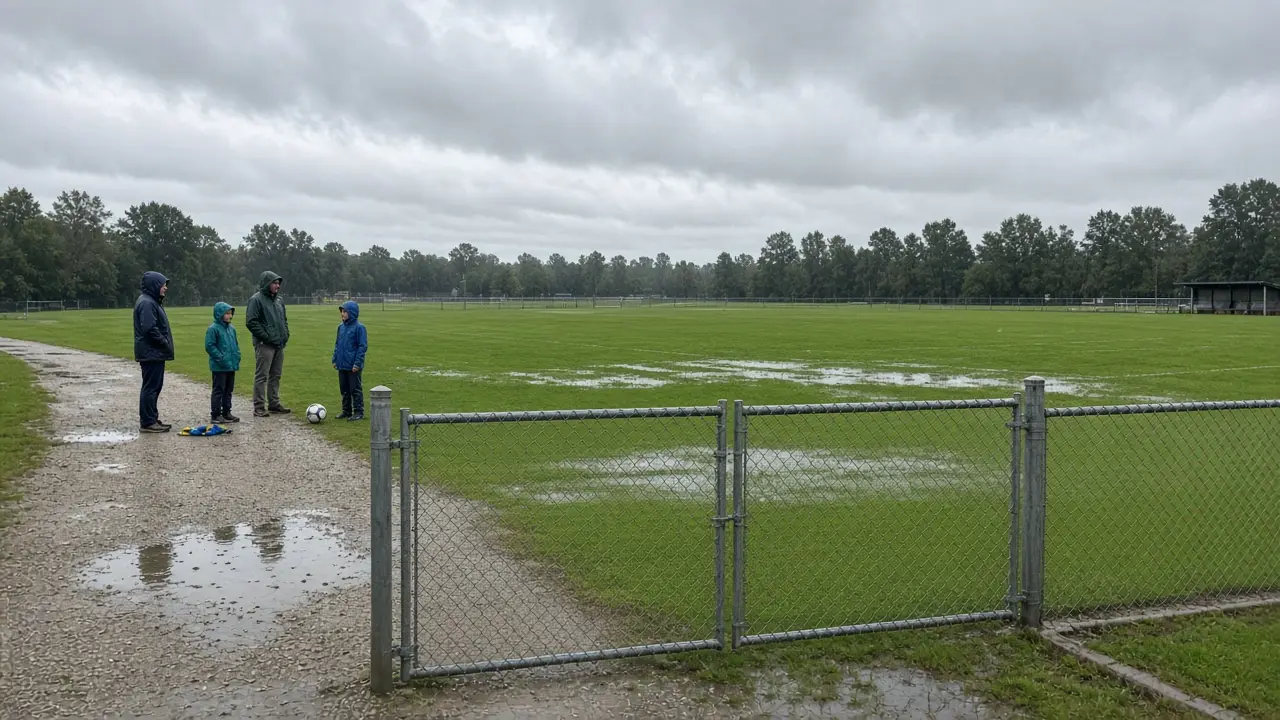
If you run a youth league, Sunday is not a quieter Saturday. It is the day a wet field, a closed rink, or a school event can wipe out a game families already pinned. The Saturday arrival note got them to the right gate. It cannot tell them the gate is closed because the grass is standing water.
A rainout fails the same way a Friday schedule change fails when it stays in one coach’s phone. Fall ball makeups and a tennis rain call are the same job: one person decides, the schedule updates, and the car still at home hears it before the car in the lot does. The sport changes. The publishing problem does not.
A Miami flag football complex and a Chicago basketball school can both lose Sunday to something that is not a drizzle. Lightning, a flooded lot, a boiler that is off, a rink compressor. If the only notice is a photo in a team chat, the family that followed Saturday’s pin still shows up.
Who should call a Sunday youth sports rainout?
One director, or one person that director named before the weekend. Every coach making a separate call produces two answers.
The coach standing on the field can see the puddle. They should not be the publisher. A Dallas soccer coach and a Houston volleyball coach will describe the same closure in different words, and parents will quote both. Put the call on the league dashboard first, then send it. The message points at the schedule. It does not replace the schedule.
The other team has to hear the same call. A home coach who texts only their own roster leaves the visitors in the car. When two clubs share a Sunday, the person who owns the field publishes once, and both schedules show that status. Parks may close a whole complex while a coach still thinks one corner is dry. The complex status wins. A visitor driving across town should not learn about the closure from a sideline that already went home.
When should families hear that Sunday play is off?
Before they leave, and again if the call changes. A message that lands after the car is in the lot is a conversation, not a cancellation.
Lightning at dawn and a field that looked fine on Saturday night are normal. Send the note when the decision is real, not when the group chat is nervous. If the league can name a check time — the 9:00 game is off if the field is still closed at 7:00 — put that time on the schedule before Sunday. A Minneapolis hockey family driving to early ice needs the note the night before when the rink already knows. A Denver hockey garage and a Seattle soccer grass field do not share a clock. They share the rule: one time, one status.
Say what you are not deciding. A message that debates the forecast invites replies, and those replies become a second schedule. The note is the status, the place, and the next update time. Families who still want to play can ask the director after the slot is marked. They should not settle it in a thread that half the team will treat as a yes. If the league clears a field for a set stretch after the last lightning strike, write that rule before the season and use it the same way on grass, turf, and courts.
What should a rainout message include?
Status, place, and time. Status is canceled, delayed, or moved. Place is the facility and the field, court, or rink. Time is the old start and the new one, if there is a new one.
“Weather” is not a status. An Atlanta baseball diamond can wait while an outfield drains and still play. A Boston tennis court can move indoors or stop. Say which. If the move changes the entrance families used on Saturday morning, name the new lot in the same sentence. Leave last week’s pin in place and people will follow it.
- Canceled means that slot will not be played today.
- Delayed means the same field, a later start, and a time you will update if it slips again.
- Moved means a new facility or a new field number, written next to the old one.
How is a delay different from a cancellation?
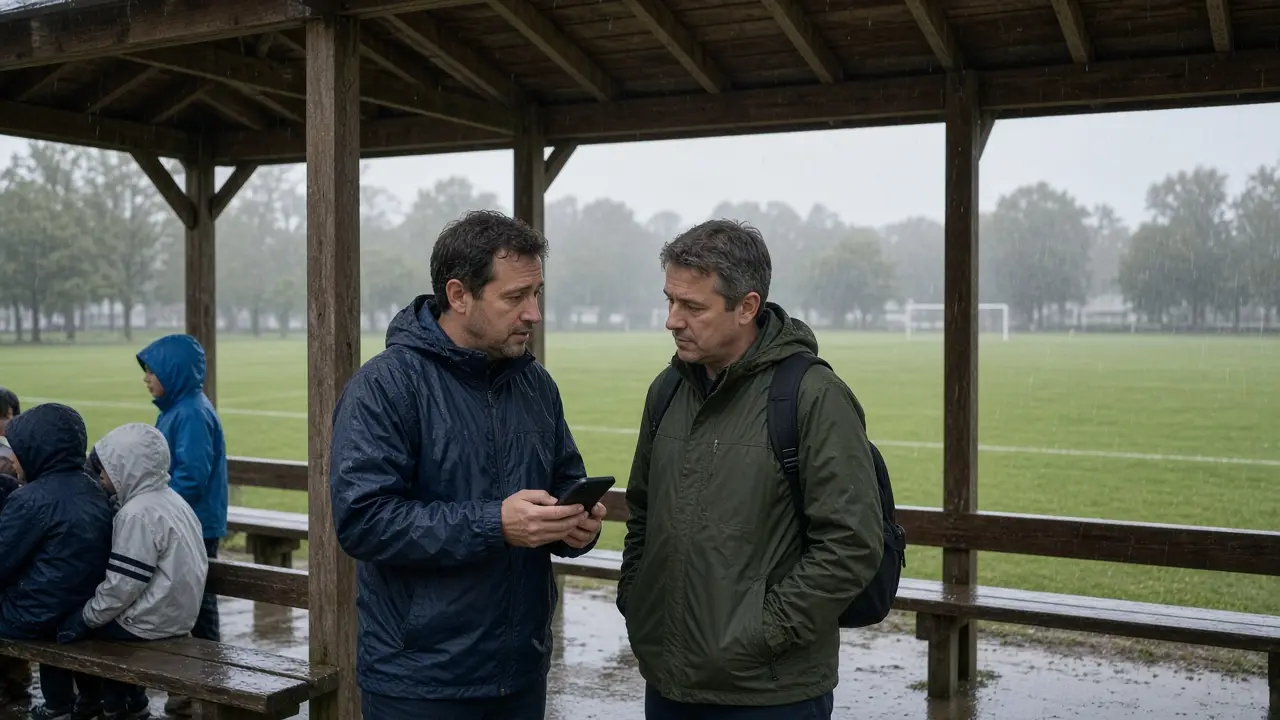
A delay keeps the assignment and changes the clock. A cancellation ends the slot. Families treat a vague “hold tight” as permission to drive.
If you delay, give the next time you will update. “We will update at 8:15” is a plan. “Stay posted” is how a Los Angeles soccer lot fills with people who cannot find a coach. If the delay becomes a cancellation, replace the delay line. Do not add a second message that fights the first. Orlando baseball and Phoenix pickleball both get this wrong when a coach texts “still on” and the schedule says “off.”
What should happen to makeup games?
A makeup is a new game on the schedule, with a date, a place, and a lot. A promise to find another Sunday is not a makeup.
Parks departments hand fields back in short windows. Take the window, publish it, and say which teams it covers. Do not assume every rained-out age group gets the same night. A Baltimore lacrosse turf slot and a Tampa soccer grass slot will not open together. Tie the makeup to the game it replaces so referees and families move with it. A coach poll that asks who can play Thursday is invisible to the rest of the league. Officials need that line too. A family that knows Thursday was added, and a referee who still has Sunday on their assignment, produces kids on a field and no whistle. Move the crew when you move the game. If you cannot staff the makeup, leave the status as canceled until it is staffed. Do not ask coaches to find an official in a text the assignor never sees.
Do indoor sports still need a Sunday weather note?
They need a building note. Rain on the roof is not what closes a gym, a rink, or a bank of courts. A locked door, another event, or a failed compressor does.
Charlotte basketball can lose a Sunday slot to a school booking that was on the calendar for weeks. New York basketball can lose it to a door that is not the weekday door. Hockey can lose ice when the sheet is reserved for someone else. The family still needs canceled, delayed, or moved. San Diego flag football on grass and a gym program share that sentence even when the sky is not the reason.
A complex with several fields needs a status on each field, not one sentence for the whole park. One diamond can be playable while the next one is still under water. Canceling every game is the right call when the lot is closed or lightning is on the property. It is the wrong call when only one field failed. Families will ask which number. Answer with the number already on their schedule, and do not rewrite the fields that are still on.
How should coaches handle families who still show up?
Point them to the live schedule and the status line. Do not invent a dry corner of the complex from the parking lot.
Kids who are already dressed will want to play. A coach who walks them to another field because it looks better creates a second game the referee, the other team, and the director do not have. If the schedule says canceled, that slot is canceled. A real backup field belongs on the schedule before anyone walks to it. Tell the families who drove what the makeup line will say and where they will see it. That line should also be what Monday’s week-ahead schedule picks up, so Sunday’s closure does not become Thursday’s surprise. Coaches Pick keeps the status next to the roster so the coach is not the only copy. Pricing stays free for league owners.
What should a director check before Sunday morning?
Every Sunday slot needs a status, including the slots that are still on. Silence reads as “play” to the family who did not see the rain.
- Every Sunday game shows on, delayed, moved, or canceled.
- The person allowed to change that status is named, and coaches know it is not each of them.
- A move includes the new lot or door, not only the new field number.
- A delay includes the next time you will update it.
- Makeups are dated assignments, not a sentence left in last night’s text.
- A gym, rink, or court closure uses the same words as a grass closure.
If those things are true, a wet Sunday is a message, not a parking lot full of people comparing screenshots. Brands that want to be useful on a washed-out morning can sponsor a game. Directors can request a demo. Coaches Pick stays free for league owners.
Frequently asked questions
Who decides if a Sunday youth game is rained out?
One person the director named before the weekend. Coaches can report what the field looks like. They should not each publish a different status. The live schedule is the decision families should follow.
How early should a youth sports rainout be sent?
As soon as the field, gym, court, or rink is actually closed, and before families leave home when the call is already known. A note that arrives after the car is in the lot is too late to be the only notice.
What belongs in a youth sports makeup note?
The date, the start time, the facility, the field, court, or rink, and the lot or door. Say which canceled game it replaces. A message that says the league will find a day later is not a makeup.
Is Coaches Pick free for league owners sending rainouts?
Yes. Coaches Pick is free for league owners. Parents, coaches, and players see the same canceled, delayed, or moved status, including a makeup that is added later in the week.
Need free youth league management software?
Coaches Pick is free for league owners. Registration, schedules, messaging, and portals for parents, coaches, referees, and kids — built for NFL FLAG and other youth sports programs that are adding teams.