Youth Sports
First Youth Basketball Practice: A Simple Plan
For a first youth basketball practice, teach one skill, give everyone many chances to try it, and finish with a small-sided game that uses it. A flexible 45-minute session is one starting point for beginners, not a requirement or a target for every age group.
· Coaches Pick · 5 min read
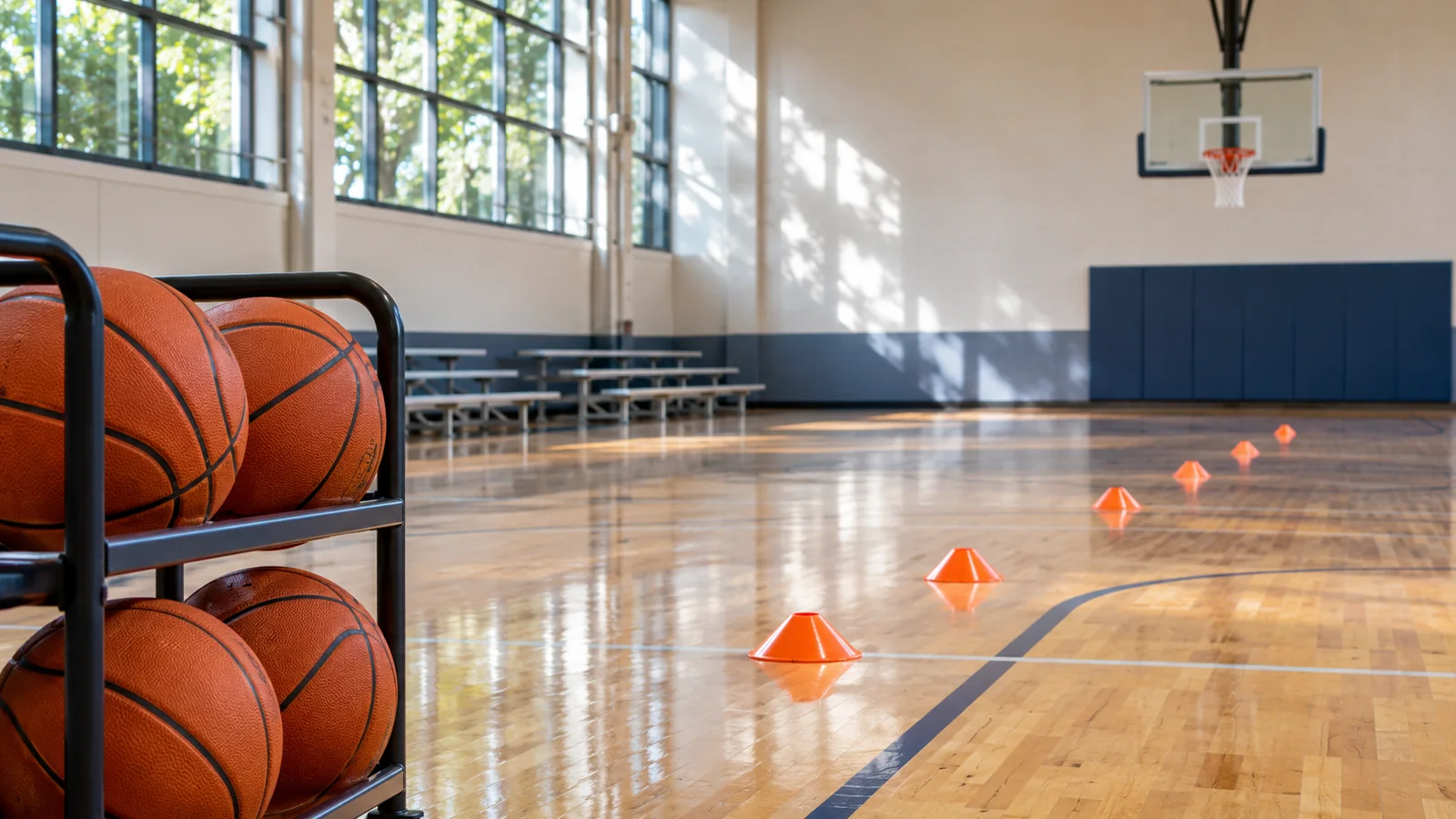
For a first youth basketball practice, teach one skill, give everyone many chances to try it, and finish with a small-sided game that uses it. A flexible 45-minute session is one starting point for beginners, not a requirement or a target for every age group.
A useful first practice tells children what happens when they arrive, where to go when they need help, and one thing they can already do better than when they walked in. It does not have to settle lineups, cover an entire playbook, or reveal who should play which position.
What should a coach check before practice?
Confirm the court, time slot, age group, and supervising adults before planning drills. Walk the gym for hazards, find the emergency access point, and review the league’s arrival, pickup, and emergency procedures. Then select one skill, choose a simple version, and plan a backup that works with fewer balls or less space.
Check the equipment and age-group recommendations in USA Basketball’s youth guidelines, then match your league’s local rules and available facilities. Adjustable hoops help only if the gym permits you to change them. If you share the gym, agree with the other group on court boundaries and where balls, bags, and water bottles go. The shared gym-time guide covers those logistics separately.
Set one obvious meeting area where a new arrival can find the group without walking through a drill. Tell an assistant to welcome late arrivals and give them the same short explanation everyone else heard. If practice starts with only a few children, use an easy movement activity rather than waiting for a full group.
How can a first practice fit in 45 minutes?
Use 45 minutes as a flexible example: five minutes for welcome and boundaries, seven for an easy moving warm-up, twelve for one skill, fourteen for a small-sided activity, four for review, and three for pickup. Shorten activities when attention fades, allow water as needed, and protect the gym handoff.
| Minutes | Activity | What the coach looks for |
|---|---|---|
| 0–5 | Meet, learn names, point out the court boundaries and water area | Each player knows where to go when the whistle or agreed signal stops play |
| 5–12 | Walk, lightly jog, and change directions in open space | Players keep enough room to move comfortably |
| 12–24 | Partner passing or an adapted ball-handling activity | Everyone takes repeated turns instead of standing in a long line |
| 24–38 | Two-on-two or three-on-three using the skill | Players look up and include teammates |
| 38–42 | Water and a quick review | At least one player can explain the cue in their own words |
| 42–45 | Pack up and follow the league’s pickup plan | Children leave through the agreed handoff process |
The USOPC American Development Model resources support developmentally appropriate drills and practice plans. The example schedule here is editorial, not a governing body's prescribed schedule. For younger players or a mixed-experience group, simplify instructions before you lengthen the session.
What drill works if the players have different skill levels?
Start with partner passing on clearly marked spots and give one cue, such as showing hands before a pass. Let beginners move closer or use a lighter league-approved ball. Give confident pairs a step-and-pass variation, then return everyone to one shared cue when you introduce a simple game.
A coach can demonstrate the pass once, pair players, and then watch instead of giving four instructions at the start. If passes constantly miss, shorten the distance. If a pair finishes each repetition easily, ask the receiving player to step toward an open space first. Adjust difficulty quietly rather than publicly naming ability groups.
In small-sided play, try awarding a point for a pass caught by an open teammate instead of only for a basket. If that rule creates confusion, freeze briefly, show what “open” looks like, then restart. If the gym is tight or numbers are uneven, make a supervised three-person passing triangle or rotate one player through as a neutral passer.
What should coaches tell families at pickup?
Give families the next practice’s confirmed time and gym entry point, the pickup process, and the league’s approved way to receive updates. Keep the message short and separate it from any individual discussion. If the venue or schedule is not confirmed yet, say what is pending and where the final update will appear.
A simple message might read: “Today we worked on finding an open teammate. Next session is Thursday at the same court. Please use the east doors and check out with a coach.” Replace the sample details with confirmed ones. Follow your program’s approval and privacy practices instead of setting up separate private threads with children.
Ask assistant coaches one question before the next practice: “Where did kids spend too long waiting?” If the answer is “during shooting,” add another safe station or start with a drill that does not require a hoop. If the issue was a crowded handoff or an unclear volunteer assignment, use the volunteer shift handoff guide to assign the fix.
What do new coaches ask most often?
A good answer depends on the players' age, the available facility, the league's rules, and the adults on duty. Use these starting points to make a plan you can adapt. A simpler session with more turns is usually easier to run than a long list of drills with few touches.
Do I need a full-court scrimmage at the first practice?
No. A supervised two-on-two or three-on-three activity can give beginners more turns and let them try the skill you just introduced.
Do I need a basketball for every player?
Not for this practice plan. Partner or three-person passing activities work with fewer balls if everyone has a clear role and takes regular turns.
Should I send families the whole practice plan?
Send the useful logistics: confirmed time, gym entrance, pickup instructions, and league-approved update channel. A one-sentence example of what players practiced is optional.
Need free youth league management software?
Coaches Pick is free for league owners. Registration, schedules, messaging, and portals for parents, coaches, referees, and kids — built for NFL FLAG and other youth sports programs that are adding teams.